
What did it look like?
Ancient Mesopotamian erotic art, like its poetry, is clearly differentiated into categories of mutual and exploitative, of giving/receiving and using/taking.

In the previous article, I looked at various writings from ancient Mesopotamia that give us insight into the assumptions they made about sex. Now I’d like to do the same thing for their visual art.
As in the previous article, my goal is to understand whether the form of sex depicted in ancient Sumerian erotic poems was actively practiced at the time the greatest poem in that tradition, the Song of Songs, was written. I understand that form of sex to have a coherent purpose: prioritizing our bonding instincts over our reproductive ones, making sex about connection rather than need or pleasure.
The key characteristic of this ancient form of sex is that the partners take turns, with one passively receiving and the other actively giving. Never does one partner active use the other’s body or take pleasure from it. A prohibition of intercourse seems to be part of this general rejection of using and taking.
Note: I’ve provided links to the various works of art I want to comment on in this article, rather than just including images directly. This may hurt the readability a little, but this way those who choose not to follow those links have that option. None of them seems particularly extreme to me, but that may just be because I’ve been studying this for a long time.
Did they have pornography?
The obvious first question would be, did pornography exist in this culture?
Technically, pornography means “the graphical depiction of prostitution.” I would define it somewhat more broadly as art that is designed to trigger our “hotness” response; art that portrays someone’s body as available to be used sexually.
Ancient Mesopotamian pornography fits both definitions. The most common — almost universal — motif depicts a naked prostitute bending over so that a man can have intercourse with her from behind while she drinks beer through a long straw (example).
The striking thing to me is how completely honest this is about the ugliness of what it is depicting. The man is handling her like a sack of potatoes, and she is focused on the beer and nothing else.
Mainstream modern pornography usually tries to maintain some sort of pretense of mutual desire, some suggestion that both partners are enjoying themselves. A naive young person looking at it might assume that he was seeing what normal, loving sex was supposed to look like. A Mesopotamian man looking at pornography would be under absolutely no illusions that there was anything tender or mutual, anything other than exploitation, in what he was seeing.
So we can say: yes, they had pornography. But this was a culture that recognized two paradigms of sex, lust-driven or connection-driven. And there was no confusion which side pornography fell on, no attempt to muddy the waters to make it seem more palatable.
Which brings us to the interesting part. In our culture, “erotic art” is pretty much just a fancy name for pornography. But in ancient Mesopotamia, there was erotic art that belongs to the giving/receiving side of sexuality as well.
Tender, relaxed eroticism
My favorite example is this plaque that I included in an earlier post. It conveys a feeling of utter relaxation — both partners seem to be sinking into the bed in languid ease, content to just lie there looking at each other indefinitely. As I noted before, it is probably depicting an exciting moment — the moment she initiates sex — and yet there is nothing urgent in the man’s pose. He isn’t even aroused, genitally. He just looks… happy. Content.
And yet, this utterly relaxed image practically hums with another sort of tension. A quiet tension, not a desperate, breathless one. The couple seem drawn to each other, lost in each other. This picture is full of a desire for connection. My favorite detail is her foot resting on the top of his, with her big toe curving up against his shin — a bit of “footsie,” a point of intentional contact, not just a muddle of legs.
I don’t know about you, but to me, this image doesn’t seem to function like pornography. It doesn’t make me desperate for sex. It makes me yearn to be held, intimately and tenderly.
That’s exactly the feeling this art was meant to express. Because this isn’t pornography.
It is prayer.
Locks on a fence
This plaque is part of a large trove of similar artifacts from the temple of Innana in Ashur, during the Isin-Larsa period.1 Some of the other artifacts are similar to this one, showing a naked couple on a bed. Many are more tame, showing a couple in fancy clothes embracing side by side (example). The unifying feature of all of them is the relaxed, happy posture of the couple and the intense sense of emotional connection between them.
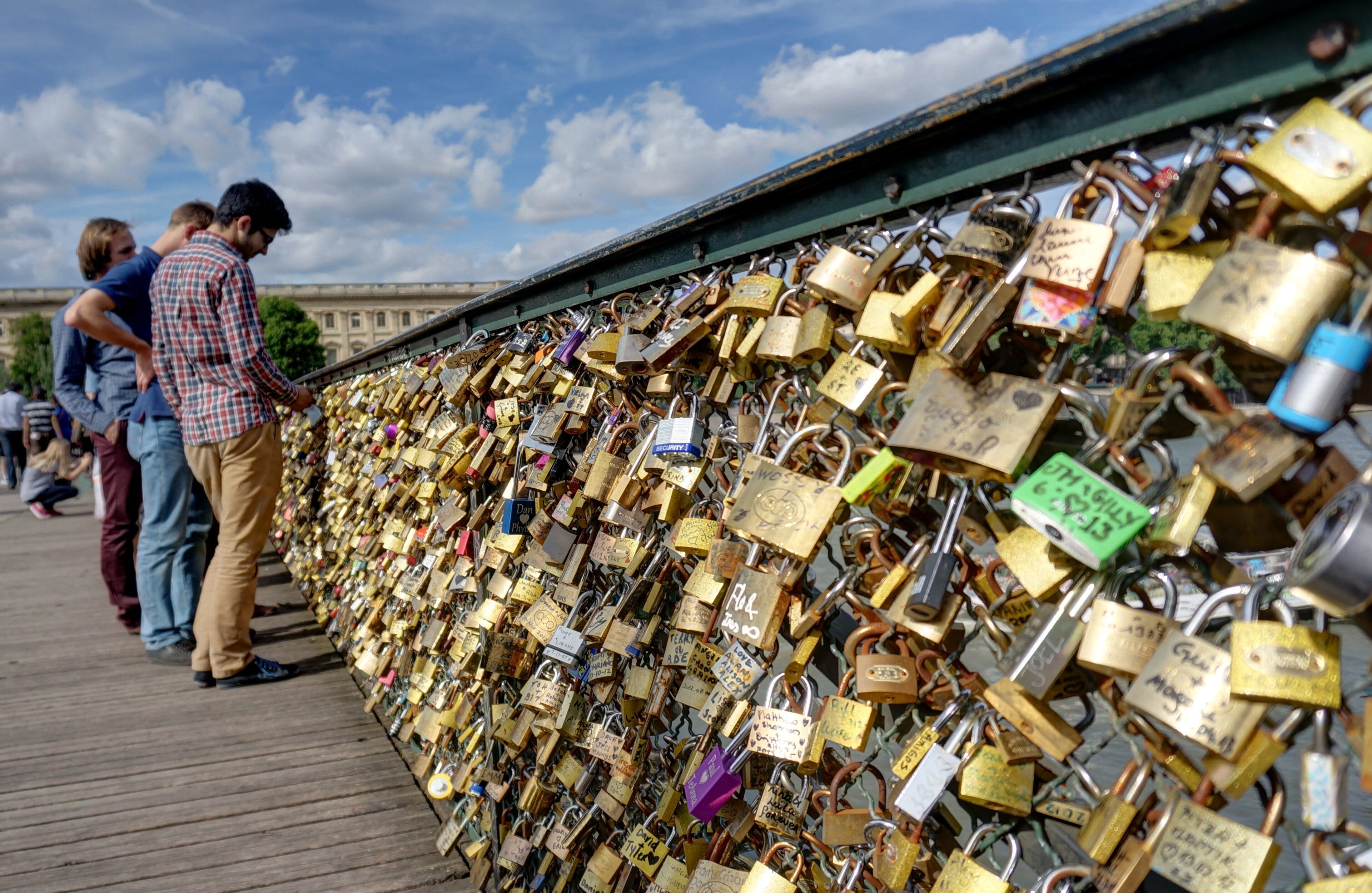
Many of these artifacts take the form of a bed with four legs. Designed to be displayed flat on a surface, not hung on a wall. Scholars suggest they were left by worshippers who came to the temple of Innana, much as a visitor might light a candle in a church today. You could picture a big jumble of them on the ground at a pilgrimage site. Public declarations of love and wishes for a good marriage, like a modern couple clicking a lock onto the local bridge.
I imagine couples shopping for one of these images. Some of them went for the safer, clothed variant; some found the racier options more exciting. But all of them opted for something full of tenderness and trust.
So what did they do?
If these images show how couples wanted to portray their love, then we’re finally able to address a fundamental question. The absence of intercourse from Sumerian erotic poetry is striking. Do these images of loving couples corroborate that?
The pretty clear answer is, no. Some of the “bed” models might just be showing kissing with a lot of body contact (example), but others (example, example) are fairly unambiguously showing intercourse.

What does that mean? It could be that in the intervening millenia between the Sumerian writing and these images, the apparently rigid avoidance of intercourse had been relaxed. If natural methods of birth control had become better understood, one of the main reasons for that avoidance would cease to matter.
Or maybe the scholars were correct who thought there was a taboo against describing intercourse in erotic poetry, but assumed that it was still happening “offstage.” Sumerian erotic poetry generally goes into great detail about what’s happening during the woman’s “turn.” About half the time it then indicates that the woman “gives” in exactly the same way the man had — he caresses, then she caresses, as in the example I gave in my earlier article. The other half of the time, the man’s part is glossed over entirely, as it is in the Song of Songs. Which leaves the imagination free to fill in.
Either way, it doesn’t actually matter.
What we see here is absolutely not intercourse as mandated in the Talmudic norms that the Song of Songs was rebelling against: man on top, dominant, thrusting, taking what he “needs.” In both examples above, the couple are side by side (perversion!, says the Talmud) and the man is lying passively (a weevil from the city wall!) while the woman is the active and dynamic one. I think even Andrea Dworkin2 would agree that this is still giving-and-receiving sex, even if it is intercourse.
To me, it’s rather a relief to discover that avoiding intercourse was not a critical component of giving-and-taking sexuality. The mechanics of sex should not be the important part. The Song of Songs isn’t about “Weird Ancient Tips on Sex Technique!” What really matters is simpler, more fundamental, and extends outside the bedroom: listening to each other, giving and receiving, quiet attention, being present to each other as full people.
That’s what builds a healthy relationship, whether it’s an erotic one or not.
This information is from the note at the back of Diane Wolkstein, Innana, explaining this image, which is found on p. 43. I was unable to locate where the plaque itself is now; it was part of the Erlenmeyer collection, which was broken up and sold.
“Women have also wanted intercourse to work in this sense: women have wanted intercourse to be, for women, an experience of equality and passion, sensuality and intimacy. Women have a vision of love that includes men as human too; and women want the human in men, including in the act of intercourse. […]
[These] are not searching analyses into the nature of intercourse; instead they are deep, humane dreams that repudiate the rapist as the final arbiter of reality. They are an underground resistance to both inferiority and brutality, visions that sustain life and further endurance.
They also do not amount to much in real life with real men.”
Intercourse, p. 162. I wish I could have quoted just the first paragraph there, but that wouldn’t really be faithful to her message. The whole passage — the whole book, really — is worth reading, but it was too long to quote here.